
Staging Psychoanalysis in Japan
Ōtsuki Kenji's One-Act Play - 'Foster Father' (1933)

Something a little different.
At the end of April, I was fortunate enough to attend the IPA’s Asia-Pacific Congress,1 which this year was held in Seoul. Perhaps because of the semi-political nature of these congresses, and perhaps owing to the histories that the member Societies share, I spent the majority of my time at the conference thinking about the following question:
Is there a way to relay psychoanalytic thought, psychoanalytic history, without falling prey to a kind of exceptionalism?
The broadly anglocentric vision of what psychoanalysis is has tended to exclude those histories considered peripheral to the accepted narrative arc, often oblivious to the fact that in in the regions that occupy these ‘peripheries,’ entire psychoanalytic dynasties have risen and subsequently fallen, to be replaced by new schools, new theoretical modalities, and, inevitably, new splits.
Japan is one such ‘periphery,’ with its own particular history, one that my Japanese colleagues have been very generous (and very patient) in educating me on, and today, I wanted to briefly introduce a character within this history - Ōtsuki Kenji [大槻憲二]2
Partially as a way to provide an adequate reference point, and partially to keep things interesting for myself, I’m going to do this via a one-act play that Ōtsuki contributed to the inaugural issue of his journal, Seishin bunseki [lit. ‘Psychoanalysis’].
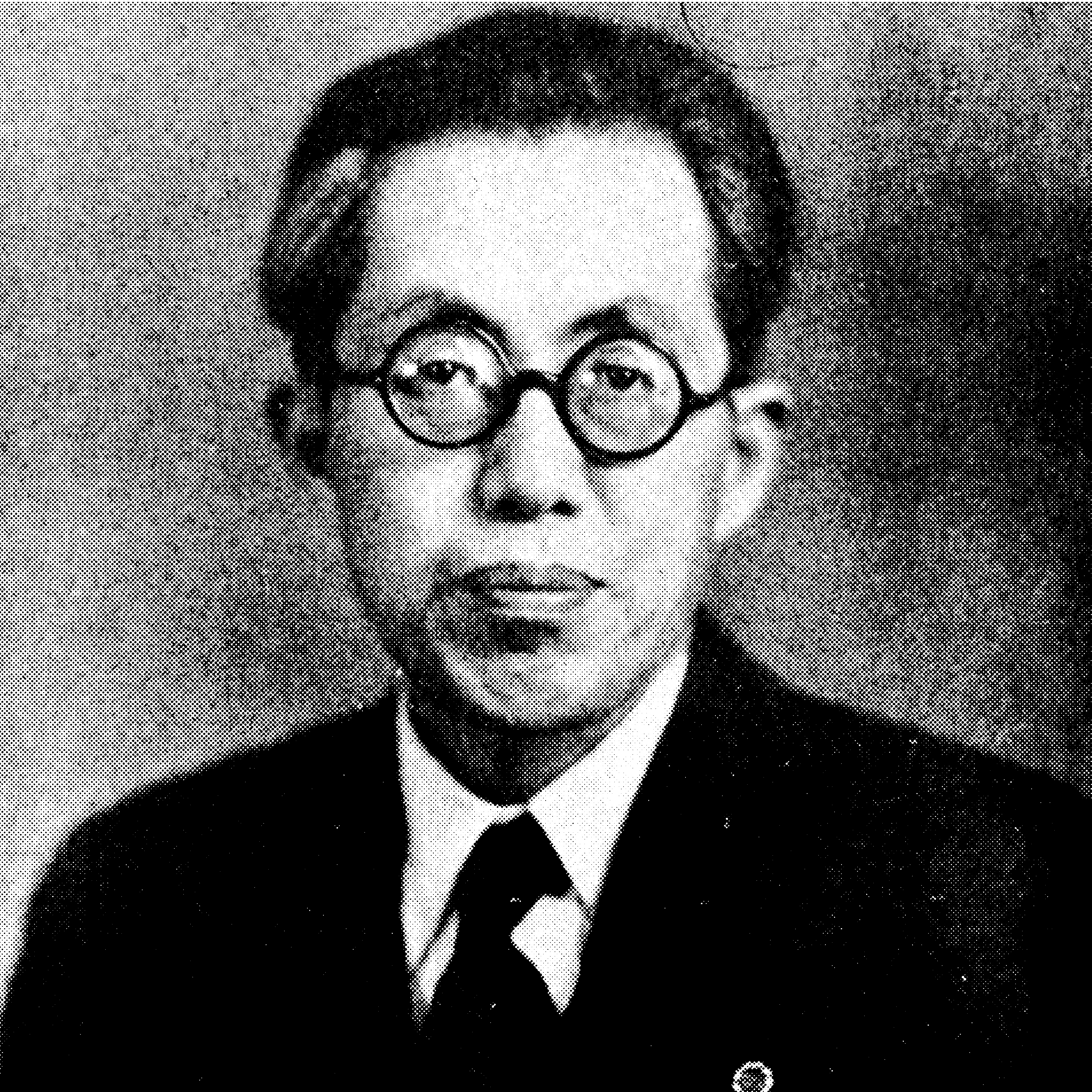
The most accessible (English) biography of Ōtsuki comes from Blowers & Yang (2001), who situate Ōtsuki as the ‘fourth man’ of the early pioneers of psychoanalysis in Japan, the other three being Marui Kiyoyasu [丸井清泰], Kosawa Heisaku [古沢平作], and Yabe Yaekichi [矢部八重吉].
An unorthodox character, representative of a field in its nascence, Ōtsuki was a literary critic and William Morris scholar, involved in both the proletarian literature [Puroretaria bungaku] and folk culture [Minzoku bunka] movements of the 1920’s.
Fiercely independent, and a staunch autodidact, Ōtsuki had not - like his contemporaries - travelled to Europe with the intention of a training analysis with Freud, and had instead remained in Japan, co-founding the Tokyo Institute of Psychoanalysis (at his home in Tokyo) with Yabe and Hasegawa Seiya [長谷川誠也] in 1928. The following year, he had begun the translation of Freud’s Complete Works into Japanese.
In 1933, Ōtsuki founded the journal Seishin bunseki, which would serve as a vehicle for the Institute, and would continue (save for a brief period during the World War) until his death in 1977. The one-act play below - ‘Foster Father’ [Yōfu, 養父] - is taken from the inaugural issue of Seishin bunseki.
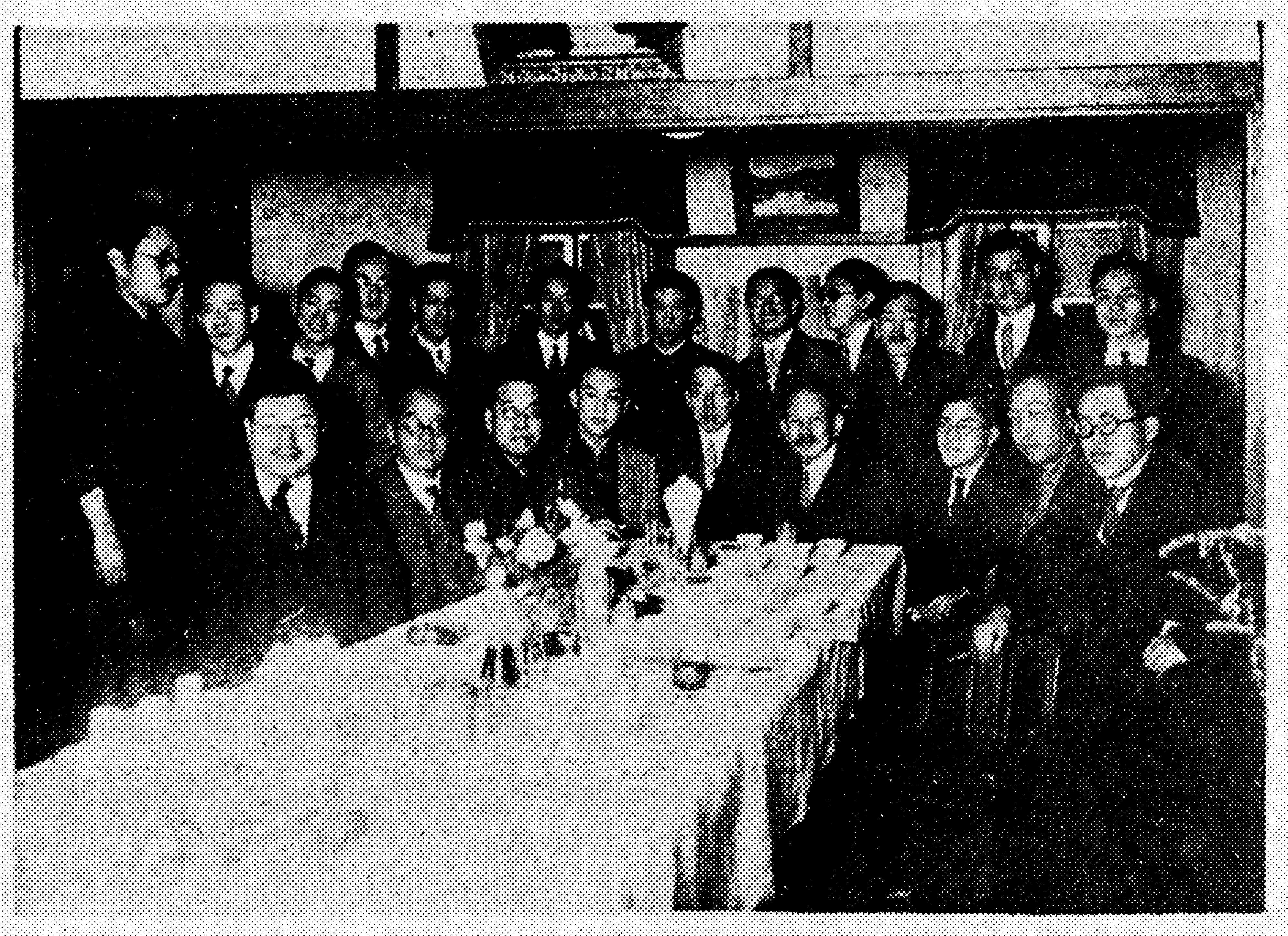
I want to hold back on a long discussion of Ōtsuki’s play, which I think I’ll save for another piece of writing, but to quickly introduce Foster Father:
Superficially, Foster Father serves as an accompanying dramatisation to Ōtsuki’s two-part contribution on the theme of the ‘Rettungsphantasie’ (rescue fantasy) - the first part of which is included in the inaugural issue of Seishin bunseki. This situates both Ōtsuki’s play and the associated theoretical contribution as a thematic elaboration of what Freud had introduced in his short paper, A Special Type of Choice of Object Made by Men (1910).
To my eyes, the juxtaposition of Foster Father and Oedipus Rex - first in print, subsequently in performance - is interesting insofar as it anticipates Japanese psychoanalysis’ emphasis on the maternal relation over the paternal one, something that will later become clear in Kosawa Heisaku and Doi Takeo’s [土居健郎] work, with the ‘Ajase Complex’ and ‘Amae,’ respectively.
Here also the centrality of the foster father in Ōtsuki’s play serves to obscure the position of the ‘mother,’ who, in both the central narrative, and the embedded legal ‘case’ that gives us the mise-en-abyme of the play, is nevertheless the motor of all the psychoanalytic drama.
However, the play is imbued with the prevailing cultural sensibilities of the interwar period, and particularly the trend for ero-guro-nansensu [erotic - grotesque - nonsense] themes - something that Ōtsuki’s Seishin bunseki made no effort to distance itself from, publishing work from writers such as Edogawa Ranpo [江戸川乱歩], a key proponent of the style.
When Ōtsuki’s Yōzō says:
“Has something happened again? There are so many unsettling things happening these days.”
he talks from the position of judge looking on in horror at a truly revolutionary - aesthetic, political, sexual - cultural moment in which decadence and depravity appared inseparable. For the early Japanese psychoanalysts, such ‘unsettling things’ served as vignettes through which psychoanalytic theory could be articulated, and, crucially, understood - destitute families selling their daughters into servitude (to which the play alludes), being just one example.

Foster Father [Yōfu]
A One-Act Play
by Ōtsuki Kenji3
Characters
Hitomi Yōzō, Justice of the Supreme Court (approximately 55-56 years old)
Fumiko, his foster daughter (approximately 30 years old)
Hama, a maidservant (17-18 years old)
Yamana Atsushi, a music conservatory student (approximately 23-24 years old)
Time
The present
Location
Tokyo, Yamanote4
Setting
The stage is a Western-style study in a solid, well-appointed house. Toward the back centre is a large desk with drawers. Beyond it is a glass window, looking down over the street through a screen of garden cuttings. Beside the window is a door leading to the rest of the house. In front of the desk is a swivel chair. To the left of the desk is a round table, with two chairs arranged around it. To the right rear of the swivel chair is a sofa. Beside the sofa, a full-length mirror hangs on the wall. The wall directly facing the mirror is entirely lined with bookshelves.
Yōzō, dressed in Japanese clothes, sits in the swivel chair at the desk, smoking and reading a newspaper. Fumiko, dressed in her finest, enters carrying a vase abundantly filled with flowers, which she sets carefully on the round table.
YŌZŌ: (glancing alternately at the flowers and at his daughter) My, my. What is all this? You look quite splendid today.
FUMIKO: Don’t I? Well, I was up early this morning and went around to every flower shop in the neighbourhood to gather these...
YŌZŌ: No, I don’t mean the flowers. I mean you… you look quite splendid today.
FUMIKO: Oh, Father, you are awful. But today is a happy day. It’s my birthday...
YŌZŌ: Your birthday? Wasn’t your birthday in September?
FUMIKO: No - my anniversary birthday. One full year.
YŌZŌ: Hmm? What do you mean? Ah - yes, of course! Hmm. Has it really been that long already? How time flies! Has it truly been a year since you became my daughter?
(looking at her again)
Hmm. But you have become quite beautiful.
FUMIKO: Oh Father, don’t stare at me so.
(she strikes a coy pose)
YŌZŌ: But if it is your birthday, we ought to prepare some kind of celebration.
FUMIKO: Yes, exactly - but Father is so cold-hearted that he had even forgotten it was my birthday.
YŌZŌ: Cold-hearted - I am humbled.
FUMIKO: Shall I bring tea and some sweets? It’s already ten o’clock.
YŌZŌ: Yes, that would be nice. Today happens to fall conveniently on a Sunday, so we can celebrate your birthday at leisure - how fortunate.
FUMIKO: Then I’ll go and fetch the tea.
YŌZŌ: No, you can ring the bell and have Hama bring it.
FUMIKO: No, it’s quite all right. I’ll go myself.
(She exits briskly through the front door.)
Yōzō tosses the newspaper onto the desk and settles heavily onto the sofa, placing both arms behind his head, clasping them together, and rocking his upper body.
Fumiko returns carrying a silver tray with tea and sweets for two. She places it on the round table, sets her own portion on the table, and brings her father’s portion on the silver tray to his side on the sofa.
FUMIKO: Please, help yourself. I’m probably not very good at making tea, am I? But do bear with me.
YŌZŌ: Mm. This is fine. Excellent. And are these sweets also your own making?
FUMIKO: Yes. But they didn’t rise properly. Ha...
YŌZŌ: Well, it’s better not to rise too much.
FUMIKO: Oh, how dreadful - I don’t puff up like Hama, you know.
YŌZŌ: No, I didn’t mean it that way. Still, you are remarkably thoughtful.
FUMIKO: Well, judges are known for their sarcasm.
YŌZŌ: I don’t bring courtroom sarcasm into the home.
FUMIKO: I’m not sure that’s entirely true.
(At this moment, from outside comes the sound of a newspaper seller’s bell.)
YŌZŌ: What could that be - an extra at this hour? Has something happened again? There are so many unsettling things happening these days.
FUMIKO: (going to the window and looking out) That bell still sounds nostalgic to me. I used to make that sound myself on the street. I worry that I might feel ashamed when people find out I was a newspaper girl. I am very happy now, of course, but I don’t think I was so unhappy before either. There was a strange kind of joy in standing on the street, covered in dust, determined to finish girls’ school somehow.
YŌZŌ: It was precisely your plucky way of working that caught my eye, so there is nothing at all to be ashamed of. Cancelling all my newspaper subscriptions and buying my paper from your hands every morning and evening - that has now become a fond memory. It has already become a dream of a year ago. Come, sit here. I had a strange dream last night. Let me tell you about it.
(He shifts to one end of the sofa and gestures for Fumiko to sit beside him.)
FUMIKO: A strange dream? What sort of dream?
YŌZŌ: In the dream, the two of us were walking together along a high mountain ridge. To the right was a sheer cliff face, to the left a ravine of a thousand fathoms. It was evening. Mist had closed in over the valley floor, and the sun showed a strange, dull red light. And then - whether I stumbled first or you, I cannot say - one of us lost footing and we tumbled down into that terrible ravine. Yet the body felt oddly light - no sense of having shattered legs or back. When I looked beside me, there you were, face down, collapsed on a great rock.
(He pauses)
Yes - stand up for a moment -
(He has her arrange herself on the sofa in the position)
- like this, you were lying. I was quite certain you were dead. I lifted you and gathered you up -
(He lifts Fumiko and holds her in his lap, seated on the sofa)
- just like King Lear carrying the dead Cordelia, I wandered here and there. And finally I made my way to a spring where water trickled softly, and there I took water in my mouth and gave it to you drop by drop -
(He brings his mouth close to hers as if about to do so. Both become visibly agitated. Fumiko responds with an instinctive movement. Yōzō’s eyes shine strangely. A moment of silence.)
- How many times did I give you water, I wonder...
(His voice trembles strangely)
Ha... (a dry laugh) ...after that, what happened? I’ve forgotten.
FUMIKO: Father - did I die like Cordelia?
YŌZŌ: (laughing emptily) Ha... no, you certainly came back to life. Because I gave you water, you see.
FUMIKO: (in a somewhat coquettish voice) I don’t want to die yet.
(At this moment there is a knock at the door. Both start slightly and stand. The knock comes again.)
YŌZŌ: (composing himself) Come in.
HAMA: (entering) A Mr. Yamana has called...
YŌZŌ: Is it Atsushi’s father, or Atsushi himself?
HAMA: It is Atsushi, sir.
YŌZŌ: Show him in.
HAMA: He has already come in, sir.
ATSUSHI: (entering with a bouquet of flowers, cheerfully and without ceremony) Good morning, Uncle. Fumiko, it’s been a while! Today is your anniversary, isn’t it?
(He looks equally at both of them)
I believe it was on this same day last year that my father brought your parents and you to call here...
FUMIKO: How kind of you to remember. Father here had already forgotten entirely. And yet he asked your father to investigate my background - when you have the chief of criminal identification at the Metropolitan Police on the case, everything comes to light, doesn’t it. Ha...
ATSUSHI: My father had meant to call today himself, but despite it being Sunday he has no rest, what with the identification work on that assassination case.
YŌZŌ: Is that so. Then I wonder if today’s extra is connected to that somehow.
ATSUSHI: I haven’t seen the extra... In any case, this is a celebration gift.
(He hands the bouquet to Fumiko.)
FUMIKO: My goodness, how lovely - thank you so much. I’ll put them in with these.
(She places them in the existing vase.)
ATSUSHI: These are a new variety just released for the first time at Shiseido in Ginza - quite rare roses.
FUMIKO: Thank you.
YŌZŌ: I don’t know much about such things, but they look splendid... Now, speaking of your father - I recall he was troubled that the origin of the pistol the suspect was carrying in that assassination case couldn’t be traced. I may have some information. Tell him when you get home.
(He takes a pistol from the desk drawer)
This one I acquired from the Kanamura Gun Shop in Yokohama - it’s Spanish made, quite rare. The suspect was carrying one of the exact same type, so the provenance should be easy enough to trace. Tell your father when you leave.
ATSUSHI: Is that so.
(He takes the pistol and examines it for a moment.)
FUMIKO: It gives me the creeps - please just leave it there on the desk.
ATSUSHI: (silently sets it on the desk)
(The maid enters with tea and sweets, places them on the round table before Atsushi, and withdraws. Atsushi stirs sugar into his tea.)
FUMIKO: (suddenly bursting out laughing) Ha ha!
ATSUSHI: What is it, Fumiko? Suddenly laughing to yourself like that - it’s unsettling.
FUMIKO: Well, you see - I would be standing there in front of Tamachi Station selling newspapers, and then suddenly three policemen would come marching up, very officiously, and station themselves at the corner of the tram road to watch me. Then they would follow me all the way home, sometimes behind, sometimes ahead of me. I can’t tell you how unnerving it was. And then it turned out they were Metropolitan Police constables, acting on your father’s orders. I couldn’t begin to say how anxious it made me.
ATSUSHI: But that was at Uncle’s request, and Father gave the order.
FUMIKO: (ingenuously) Father - why did you take notice of someone like me?
YŌZŌ: (somewhat taken aback) “Take notice” is a rather strong way of putting it...
(Hastily changing the subject)
Well - more to the point, how are the music lessons going? Surely that’s why Atsushi came today - why not run through something while you’re here?
FUMIKO: Yes, let’s. I’ll see you again later and we can talk properly - do stay a while, won’t you.
ATSUSHI: Thank you. Shall we go to your room then, Fumiko? Well - excuse us.
YŌZŌ: Please, go ahead.
FUMIKO: I’ll just play for a little while.
(Both exit.)
YŌZŌ: (lightly wiping the sweat from his brow, soliloquy) “Took notice,” she said. A dangerous phrase to use. And yet - perhaps that is indeed what it was. It rather seems as if it might have been. That much even the chief of criminal identification at the Metropolitan Police could not identify, and the Supreme Court justice could not adjudicate. Ha...
(From a distant room, the bright sound of piano begins to filter through. Yōzō takes from the desk drawer a soiled white women’s work garment. He leans against the sofa and, placing the garment on his lap, strokes it over and over in silence. Suddenly, hurried footsteps in the corridor. Yōzō starts, and hides the garment behind him.)
FUMIKO: (appearing half-way through the doorway) Father - are you there? Today is my birthday, so why don’t the three of us sing cheerfully together? There’s no need to sit there making that hermit’s face.
YŌZŌ: Hmm, but I can’t sing songs like you young people do.
FUMIKO: That’s all right. Then just sit nearby and listen. Otherwise it feels somehow lonely.
(She comes fully into the room.)
YŌZŌ: Ah, thank you. Your kindness warms me deeply - but I really must prepare tomorrow’s judgment.
FUMIKO: Tomorrow’s judgment - is it such a serious case?
YŌZŌ: Hmm, yes, quite serious. It may even come to establish a new precedent. I know - why don’t I hear your opinion on it? It may serve as a reference. Come, sit here.
FUMIKO: But I don’t understand anything about such matters.
YŌZŌ: It doesn’t matter if you don’t understand - common sense is enough. Common sense sometimes strikes far closer to the truth than legal theory.
FUMIKO: (sits beside her father on the sofa - father toward the back, daughter closer to the audience)
(The piano sounds again for a time. Fumiko rings the bell. The maid enters.)
FUMIKO: (to Hama) Please tell Mr. Yamana I apologise for the interruption - tell him I’ll be right back.
HAMA: Certainly.
(She bows, picks up the tea tray from the round table, and exits.)
YŌZŌ: Now then - the defendant is a girl of eighteen. There is suspicion that she killed the foster father who had raised her from swaddling clothes.
FUMIKO: Why ever would she do such a terrible thing?
YŌZŌ: Whether she did or did not, the definitive evidence has not yet been established. There is no other likely suspect, and the girl had what appears to be a reason to have killed her father.
FUMIKO: What reason was that?
YŌZŌ: It is somewhat difficult to say in front of you - but the facts are the facts, so I will say it: the foster father took from the girl the thing she held most precious.
FUMIKO: Good heavens - what a monster. That he could do such a terrible thing to someone he had raised from infancy...! So the girl killed him in revenge. That seems entirely understandable.
YŌZŌ: Even setting aside the debt of being raised and supported?
FUMIKO: Even speaking of a debt of support - it seems to me that he must have been raising her with that wicked plan in mind from the beginning.
YŌZŌ: No - that is reasoning from the result. To judge motivation from outcome alone is rash. Besides - the man had originally been in love with the girl’s mother. He could not consummate that love. The mother died in childbirth - the child having been fathered by another man - and he took in the infant as a kind of solace, raising her as his own daughter.
FUMIKO: Even so - such a bestial act is unforgivable.
YŌZŌ: I too thought so until recently. But lately I find myself thinking that perhaps it cannot be dismissed so simply.
FUMIKO: My - if a Supreme Court judge such as yourself suffers such moral wavering, it is rather alarming.
YŌZŌ: Indeed, you make a formidable opponent. I am humbled. And yet - human beings perhaps cannot always act in accordance with morality and the law. It may be improper for a judge to say such things, but the heart is not constructed like the law.
FUMIKO: Then perhaps the girl’s parricide must also be condoned?
YŌZŌ: That is precisely the point. The crux of the matter is this: if we judge the father’s act as evil, then the daughter’s killing of him must have its circumstances weighed in mitigation. But if we regard the father’s act as justified, then the daughter’s act becomes unjustifiable parricide of a superior family member.
FUMIKO: And you, Father - you are leaning toward condoning the old man’s behaviour, it seems.
YŌZŌ: One might say so, yes.
FUMIKO: (silently turns her body slightly away from her father)
YŌZŌ: But Fumiko - can one really draw such a clear distinction between love as a father and love as a man? The very nature of human affection has become something I no longer understand. If there were a blood relationship it would be another matter - but if there is none...
FUMIKO: Oh - it’s wrong to leave Atsushi alone like that.
(She stands.)
YŌZŌ: Wait - just a moment, Fumiko.
(He is visibly agitated. He reaches for her hand, then releases it - but his eyes continue to fix on hers.)
If the father’s heart held no deception - what then? And if the daughter herself, from time to time, toward the father...
FUMIKO: (rises convulsively in extreme terror, moves away from the sofa to the center of the stage, and stands motionless)
...
YŌZŌ: Fumiko. I said wait - I haven’t finished...
FUMIKO: (rushes toward the door and exits)
YŌZŌ: (standing) Fumiko - won’t you wait?
(He stands for a moment, then in sudden fury rings the bell on the desk hard.)
HAMA: (entering) Did you need something, sir?
YŌZŌ: Yes, would you call Miss Fumiko for me.
HAMA: Certainly.
(She exits.)
Yōzō, agitated but feigning composure, lights a cigarette and sits on the sofa.
ATSUSHI: (enters with arms folded) Uncle - what has happened?
YŌZŌ: (irritably, after a pause) What do you mean, what has happened?
ATSUSHI: Fumiko’s face has gone quite pale. I find this troubling.
YŌZŌ: (after a pause) There is nothing for you to find troubling. Did Hama tell you to come here?
ATSUSHI: No - but Fumiko asked me to come in her place.
YŌZŌ: There’s nothing to be helped by having you come.
(Standing and pointing to the door)
Off you go. I had something to ask Fumiko and she walked out in the middle of it - outrageous behaviour.
ATSUSHI: (exits without ceremony)
YŌZŌ: (sitting down) Standing there with folded arms in front of one’s elders. Young people today have no sense of propriety.
Fumiko enters, her face pale.
FUMIKO: I do apologise for the rudeness.
YŌZŌ: (making an effort to be gentle) Sit down there.
(He indicates one of the chairs at the round table. He watches her sit, then pulls out the swivel chair and sits in it.)
What happened? Running out in the middle of a conversation like that - have you lost your mind?
FUMIKO: (face down, silent)
YŌZŌ: Now then - where had the argument got to? I’ve forgotten.
FUMIKO: (speaks quietly, in a low voice) Father. Please forgive me. I know it was wrong not to have sought your permission beforehand - but a person must live a natural life, otherwise everyone will end up unhappy in the end. And I have made a vow to my own soul that I cannot break regardless of what duty might demand, and so...
YŌZŌ: (irritably) Are you under some misapprehension? Who are you talking about? Yourself? ...Fool. Something is wrong with you. I hadn’t thought you normally such a dim-witted woman. Now wait - where had the argument reached?
(He holds his head in his hands)
Damn it! My thoughts have become completely disordered. I can’t grasp anything at all.
(staring into space)
Yes... But - more than that - are you leaning toward condoning the daughter’s parricide?
FUMIKO: I cannot reach any judgment either way.
YŌZŌ: (furiously) Don’t lie to me! You are condoning it, aren’t you. I’m sure of it. Then say so honestly. I won’t be angry over such a thing.
FUMIKO: No - I truly cannot tell. I lean rather toward thinking it was wrong.
YŌZŌ: (rising furiously) Are you mocking your father? You think that’s what I want to hear, don’t you.
(He moves around the round table toward her.)
FUMIKO: (quickly rising and retreating to the other side) No, Father - please, I beg of you... I... please don’t touch me. I have become somehow frightened of you, Father. I feel as though I don’t know what might happen. I don’t dislike you, Father - not at all. On the contrary, I...
(pause)
...Father, ever since you said just now that you can no longer clearly distinguish between love as a father and love as a man - I too feel as though the very ground of my own feelings has completely destabilised. I am not afraid of you, Father. I am afraid of myself.
YŌZŌ: (unable to restrain himself, he extends his arms and fixes his gaze on her face. He reaches out and seizes her, drawing her toward him. He stares at her face with passionate eyes.)
FUMIKO: Let go - (struggling) Father, let go, let go...
(A knock at the door. The father does not release her. A second knock.)
FUMIKO: (in a small voice) There - someone has come.
(She finally breaks free from her father’s arms and rushes to the door. There she falls into the arms of Atsushi, who has opened the door and stands half-visible in the frame. For a moment she stares back toward her father. Then the two of them disappear behind the door. The sound of the door being shut shakes the room hard.)
YŌZŌ: (startled by the sound, he stands in fury. From the distant room, the quiet suppressed laughter of a young man can be heard, which gradually swells into a bright choral singing. Yōzō in rage seizes the pistol from the desk and charges toward the door. He opens and shuts it two or three times, opens and shuts it again. The hand holding the pistol trembles. Then, decisively, he shuts the door, takes his key from his belt, and with a click locks it.)
How absurd. How childish. But - this pistol I have picked up - where does it point? At the man? ...Cowardly. At the woman? ...I cannot bear it. Then at myself?
(As he speaks, he goes to the sofa and picks up the work garment. He holds it against his chest, then presses the pistol against his own heart over it. He stands before the full-length mirror at stage left and gazes for a long moment at his own reflection.)
A soul that must not love - could such an existence truly be endured on this earth? ...But... but... “The unrequited suicide of Supreme Court Justice Hitomi Yōzō.” - Quite the tabloid scoop.
(He suddenly turns and snatches the flower vase from the round table and fires the pistol at it. The vase shatters and the flowers scatter in all directions. In the silence that follows, a bitter self-mocking laugh. Outside the room, the sound of hurried footsteps. A frantic pounding at the door.)
FUMIKO’S VOICE: Father - what has happened?
ATSUSHI’S VOICE: Uncle - has something happened?
FUMIKO’S VOICE: Please open the door!
ATSUSHI’S VOICE: Open the door! What was that sound?!
FUMIKO’S VOICE: Father - Father?!
(Pounding at the door continues.)
YŌZŌ: (coldly, without turning around. He settles onto the sofa and, placing the work garment on his lap, slowly strokes it. Then, after a long deep sigh):
Perhaps I should have left her in the wild after all...
(As he speaks, he lifts the work garment and gently wipes the corners of his eyes. Outside, the pounding at the door again for a time…)
Quietly, the curtain falls
The inaugural issue of Seishin bunseki that contains Foster Father is available (for free) via The Collection Of The International Psychoanalytic University Berlin [Archive.org].
The IPA, or the International Psychoanalytical Association, is the governing body for psychoanalysis, founded in 1910 by Sigmund Freud.
Here I follow the Japanese naming convention of putting the surname before the given name.
Originally published in the inaugural issue of Seishin bunseki [精神分析](May, 1933), pp. 64-76. Available online via The Collection Of The International Psychoanalytic University Berlin.
Less a geographic location, than a vague, culturally-defined area of Tokyo. Read as: comfortable, (upper-) middle-class. Compare with Shitamachi, which was considered an area of lower social standing.
I'm looking forward to your discussion of Ōtsuki’s play.